


Top 3 Bynder Alternatives: DAM Platforms For Scalable Content Operations
Gone are the days when Digital Asset Management was limited to simple file storage. Today, DAM platforms are at the intersection of marketing, e-commerce and brand operations. They power global campaigns, can fuel omnichannel experiences and help teams collaborate efficiently across markets, so it’s no surprise that certain solutions, such as Bynder, have become widely adopted.
However, as organizations grow, their needs shift, and what once worked for a mid-sized marketing team can feel constraining for a global brand managing millions of assets. As usage scales, companies start looking for more flexible pricing and modular offers that can adapt to their needs. Some of the most commonly cited needs can be better integrations with existing tech stack, stronger AI automations or even built-in image optimization that can support web performance and SEO.
A modern DAM, then, is about much more than just organizing files, it’s about enabling fast, scalable and intelligent content operations. This is the reason why many businesses start exploring alternatives that are better aligned with their long-term strategy, architecture and digital experience goals.
What to look for in a modern DAM platform
Before we get into a vendor comparison, it’s important that we define what it is that a modern DAM should actually deliver. Content ecosystems today are complex and your platform needs to be able to support more than storage.
Scalability is at the top of the list. Asset volumes will grow, which means search, tagging and performance functions need to remain fast and reliable. Strong metadata structures and AI-powered enrichment can help to significantly reduce manual work.
Architecture, too, is key, as many companies would now rather lean towards headless or composable systems that can smoothly integrate with CMS, PIM or any other tools. Automation and intelligence are also becoming increasingly essential, as AI tagging, duplicate detection and smart search considerably improve productivity and asset discoverability.
Workflow flexibility is also important: clear approval flows, permission controls and brand portals that can ensure assets are used correctly across teams and regions. Finally, we can’t ignore web performance. Response delivery, media optimization and CDN support will have a direct impact on SEO, user experience and conversion rates. The bottom line is a modern DAM should support both operational efficiency and digital growth.
Top Bynder Alternative 1: Scaleflex, A Composable Video Experience Platform
Unlike other traditional DAM vendors, whose focus is primarily on storage and brand management, Scaleflex takes an approach to digital asset management as part of a broader visual ecosystem. Its Visual Experience Platform combines four modules: Digital Asset Management, Visual AI, Brand Portals and Dynamic Media Optimization, into one composable environment.
Essentially, the DAM module acts as a single source of truth for assets, with structured metadata, user permissions and collaborative workflows. What differentiates Scaleflex is the added, performance-driven layer. Thanks to dynamic media optimization, images are automatically resized, compressed and delivered via CDN in next-gen formats, which helps improve Core Web Vitals and SEO performance.
On top of that, Visual AI adds automation to enrichment and moderation. Large volumes of images can be tagged, classified or filtered automatically, reducing manual workload and improving discoverability. The Brand Portals feature allows teams to publish curated asset collections for both internal or external stakeholders, without the need for complex development work.
Scaleflex is particularly well suited for e-commerce, retail and media-driven businesses that manage high asset volumes and care about both operational efficiency and website performance. It is headless, MACH-aligned architecture supports flexible integrations, making it attractive for companies building composable tech stacks.
Top Bynder Alternative 2: Wedia, Enterprise Grade DAM for Marketing-Led Organizations
Wedia positions itself as an enterprise grade DAM platform. They have a strong focus on marketing governance and brand consistency, and are designed to support large organizations that manage complex brand ecosystems.
Wedia’s strength lies in its structured workflows, which enable marketing teams to define clear approval processes, manage user roles with high precision and maintain a tight control over how assets are created, validated and distributed. This is something that makes it particularly attractive for enterprises operating in regulated industries or global environments, where compliance and brand control are critical.
Wedia also emphasizes omnichannel content and orchestration, meaning that assets can be distributed across websites, e-commerce platforms and marketing automation tools, guaranteeing consistent messaging and visual identity. It’s a centralized system that supports version control and localization, both crucial to international campaigns.
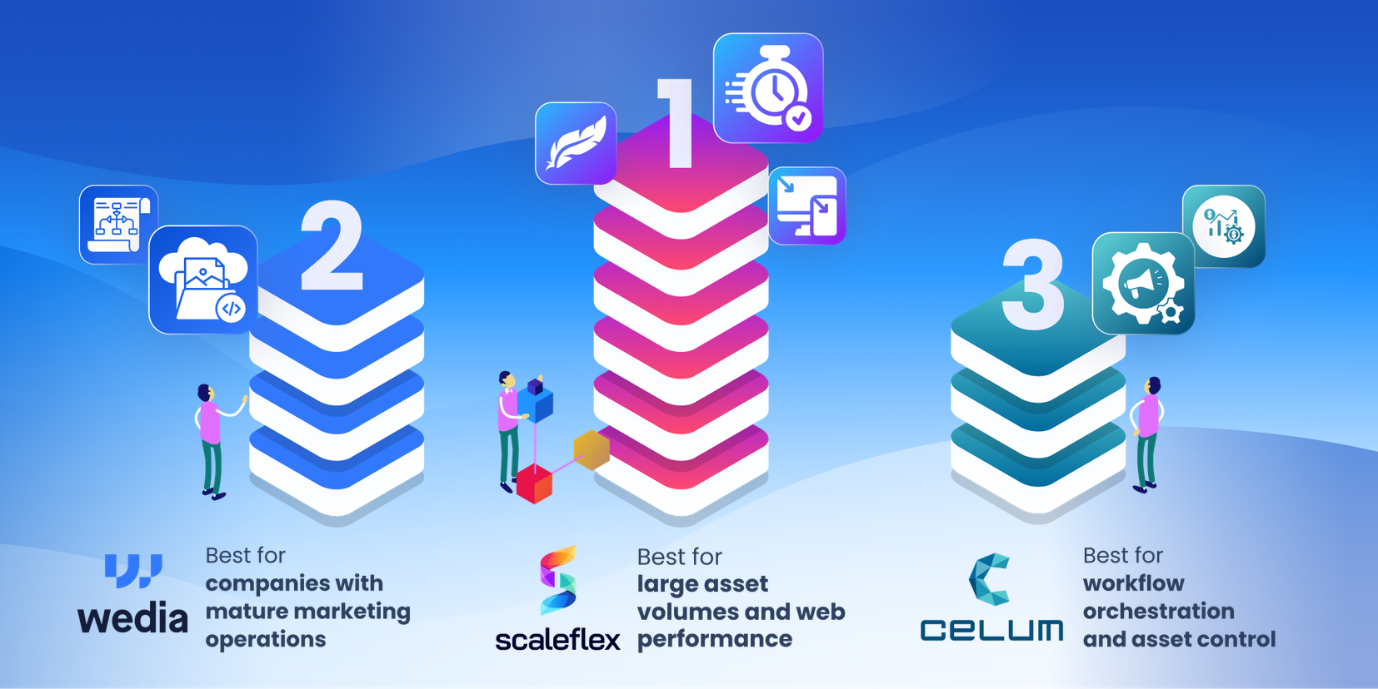
As such, Wedia will be best suited for large companies with mature marketing operations, established governance structures and dedicated DAM administrators.
Top Bynder Alternative 3: Celum, Structured Content Supply Chain for Enterprise Teams
Celum positions itself as a “content supply chain” provider, as it concentrates not only on storage and searchability, but on structured collaboration, planning and content lifecycle management across departments.
One of Celum’s key strengths lies in workflow orchestration. It enables large companies to design multi-step approval processes, assign responsibilities and track content, from its conception to its delivery. It’s a structured approach that is particularly valuable for companies that manage multiple stakeholders, such as marketing, product, legal and external agencies.
Celum can also support centralized governance through detailed permissions management and version control, reducing the risk of outdated assets being reused, and maintaining brand consistency across regions. This is interesting for enterprises working across different markets, as structured metadata and localization capabilities allow teams to manage variations of campaigns without losing visibility.
Feature Comparison At A Glance
As you’re evaluating Bynder alternatives, it will help to look at the platforms side by side. All three of the solutions presented offer core DAM capabilities, but their strengths will differ depending on business priorities.
Scaleflex stands out for its modular approach. Beyond a simple DAM, it integrates dynamic image optimization and Visual AI, which makes it particularly interesting for media-heavy websites and performance-focused teams. Its headless architecture also supports composable tech stacks.
On the other hand, Wedia leans into marketing governance, offering structured workflows, brand control and omnichannel distribution, which makes it a good fit for global enterprises with strict compliance needs.
Finally, Celum focuses on content supply chain management, and its advanced workflow orchestration and cross-department collaboration tools are meant for organizations that manage complex approval processes and multiple stakeholders.
Ultimately, the right choice will depend on whether your priority is performance and flexibility, marketing governance, or structured enterprise collaboration.
Key Takeaways
It’s important to understand that Digital Asset Management is about more than storing files neatly. It has become a central pillar for content operations, brand governance and digital experience delivery. As companies scale and grow, it's imperative that their DAM evolve with them, enabling faster workflows, smarter automations and seamless integrations across tech stacks.
Scaleflex, Wedia and Celum each approach this challenge from a different angle. Some prioritize performance and composability. Others focus on marketing governance or structured enterprise workflows. The right choice depends on your organization’s maturity, operational complexity and long-term digital strategy.